


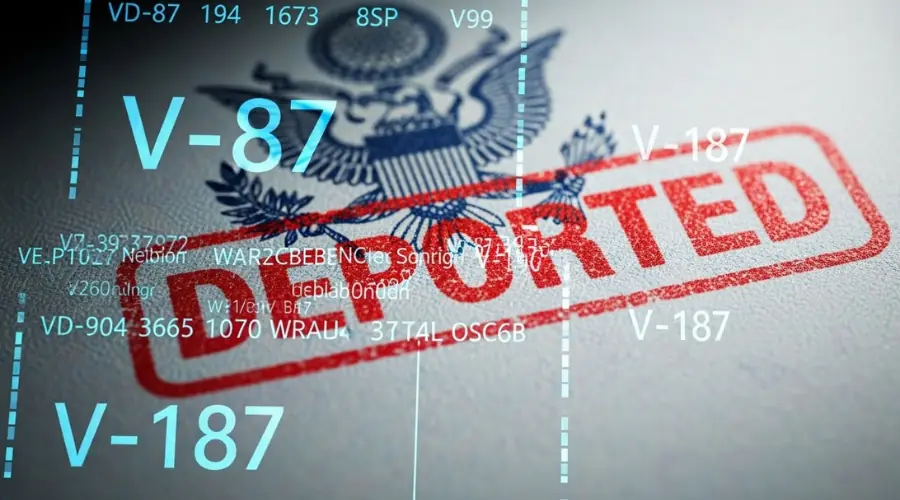
In 2026, Turkey is no longer the flexible country of past decades. With the implementation of smart borders and advanced biometric systems, overstaying even for a single day can lead to severe financial and legal consequences. If you overlook the "90 days of residence within any 180-day period" rule, you will immediately be blacklisted by the Directorate General of Migration Management and face the status of "illegal stay" or "visa violation."
In this article, we examine everything regarding Turkey's overstay penalties, how amounts are calculated in 2026, the list of entry ban codes (such as code V187), and golden strategies for lifting a Turkey deportation order.
New Turkey Overstay Penalty Law (2026 Update)
In 2026, the policies of the Presidency of Migration Management (Göç İdaresi) are based on "maximum surveillance." Unlike the past, where many violations were resolved with a simple fine, digital systems now change your status to "visa violator" as soon as the legal deadline passes.
When is a Presence in Turkey Considered "Illegal"?
Many foreign nationals mistakenly assume that their 90-day counter resets to zero immediately after exiting and re-entering the border. However, according to current law, you are only allowed to stay for 90 days within a rolling 180-day window in Turkey.
- Illegal Status: If you are still on Turkish soil on the 91st day without a residence permit appointment (randevu) or a valid card, your presence is considered illegal and subject to administrative prosecution.
Difference in Penalties for Residence Permit Holders vs. Tourists
- Tourists: Penalties for these individuals are calculated starting the day after the 90-day limit expires.
- Residence Permit (Kimlik) Holders: If your residence permit has expired and you haven't applied for an extension, the fine is calculated from the first day of the card's expiration. This group's penalty is usually heavier due to "address notification violations" (Code V-71).
How is the Turkey Overstay Penalty Calculated?
The penalty calculation is a combination of a base fine, the residence permit card fee, and administrative costs. The Turkish government applies specific formulas for different nationalities (based on reciprocal agreements), which are usually calculated in USD and paid in Turkish Lira (TRY).
Penalty Calculation Formula (2026 Estimate):
According to the latest changes, the general formula is as follows:
- First Month: 50 USD.
- Subsequent Months: 10 USD per month.
- Residence Card Fee: Approximately 964 TRY (mandatory for all violators).
- Single-Entry Visa Fee: A variable amount to normalize the exit (approximately 2000 TRY).
Overstay Penalty and Entry Ban Comparison Table
| Overstay Duration (Violation) | Approximate Fine (Excluding Admin Fees) | Entry Ban Duration | Condition to Avoid Deportation |
|---|---|---|---|
| Less than 3 months | 50 to 70 USD | Usually no ban | Full payment at the airport |
| 3 to 6 months | 70 to 100 USD | 1-month ban | Voluntary departure |
| 6 months to 1 year | 100 to 160 USD | 3-month ban | Penalty payment & departure |
| 1 to 2 years | 160 to 280 USD | 1-year ban | Recorded in border system |
| More than 5 years | Based on daily rates | 5 years to Lifetime | Forced removal/Arrest |
Vital Note: The above amounts are converted from USD to TRY based on official exchange rates. Always carry extra Turkish Lira at the airport to cover currency fluctuations.
Turkey Deportation Laws and Entry Bans (V-Codes)
Deportation (Sınır Dışı) is a nightmare for any expat. In 2026, restriction codes (Tahdit Kodları) are applied with greater precision. These codes specify why you were expelled and when you can return.
When is a Deportation Order Issued?
There are two primary ways deportation occurs:
- Voluntary Departure: You go to the airport of your own accord, pay the fine, and leave. In this case, your entry ban is very short or non-existent.
- Police Detention: If you are caught within the city, you will be transferred to Removal Centers (GGM) and, even after paying the fine, you will face a minimum 5-year entry ban.
Code V-187 and Other Common Codes
Many users ask about code V187. It should be clarified that according to 2026 official databases, V187 is usually a colloquial typo; the actual intended code is V-87 (Voluntary Return) or Ç-series codes.
- Code V-87 (Gönüllü Geri Dönüş): For individuals who have voluntarily declared their return. This is not necessarily a crime but makes re-entry subject to a visa.
- Code Ç-113: Related to illegal entry and exit. This carries a 2 to 5-year entry ban.
- Code V-71: Failure to be present at the registered address, leading to the cancellation of the residence permit.

Step-by-Step Guide on How to Pay Overstay Penalties in Turkey
If you realize you have overstayed in Turkey, follow these steps exactly to avoid a long-term deportation ban:
- Early Arrival at the Airport: Arrive at the airport (Istanbul, Sabiha Gökçen, or Izmir) at least 3 to 4 hours before your flight.
- Obtain Boarding Pass (Check-in): You must receive your boarding pass before paying the fine. The police officer will not calculate the fine without seeing a confirmed ticket.
- Proceed to the Visa Violation Office (Vize İhlal Ofisi): This office is usually located before the passport control gates. Present your passport to have the penalty calculated.
- Cash Payment in Lira: Fines must be paid in cash and only in Turkish Lira. International bank cards or other currencies are not accepted at this counter.
- Receive Receipt (Makbuz): Keep the payment receipt until you re-enter Turkey. This is your only proof of compliance.
Legal Solutions to Prevent Deportation and Penalties
The best way to manage your status is prevention. In 2026, surveillance systems accept no excuses.
Residence Permit Application (Randevu) Before Expiry
If you plan to stay longer than 90 days, ensure you register an appointment at goc.gov.tr before your 80th day. Having an appointment slip makes your presence legal until the interview day and prevents overstay penalties.
Lifting a Turkey Deportation via Conditional Visa (Meşruhatlı Vize)
A Conditional Visa (Meşruhatlı Vize) is a "legal loophole" that allows individuals to enter Turkey under specific conditions and for a designated purpose, even while having an active entry ban. In Turkish law, this is known as the strongest way to "break a deportation" before the legal time limit expires.
Here are the details for each case based on 2026 regulations:
1. Educational Conditional Visa (Eğitim Amaçlı)
This is the most common route for young people and students. If you are banned from entry but can secure a definitive admission from a reputable Turkish university (public or private):
- Conditions: You must present the final registration certificate and proof of tuition payment to the consulate.
- Key Point: The consulate sends your documents to Ankara. Upon approval, a visa is issued stating "For Education." Upon arrival at the airport, your ban is temporarily suspended so you can obtain a student residence permit.
2. Work Conditional Visa (Çalışma İzni)
If a reputable Turkish company wishes to hire you and applies for a "Work Permit" on your behalf:
- Process: The employer manages the stages within Turkey through the Ministry of Labor. Once the approval code is issued, you visit the consulate.
- Advantage: A work visa is one of the most credible types, and immigration police usually do not oppose the entry of someone who will contribute to the economy and pay taxes.
3. Marriage Visa (Aile Birleşimi)
This is for those married to a Turkish citizen or someone holding a valid legal residence in Turkey:
- Conditions: The marriage certificate must be official and registered in the Turkish population system (Nüfus).
- Importance: The Turkish government respects the "right to maintain family unity" under international law. Therefore, official marriage can be the key to an early return if you were deported due to overstaying.
4. Medical Visa (Sağlık Amaçlı)
If an individual is ill and provides documents showing their treatment must be performed in Turkey (e.g., a specific surgery by a specific doctor):
- Documents: Confirmation from the destination hospital in Turkey and a letter from a specialist doctor are mandatory.
- Limitation: This visa is usually short-term and only issued for the duration of the treatment.

Vital Points to Know About Conditional Visas:
- Previous Penalty Payment is Mandatory: Even if you obtain a conditional visa, you must settle your previous overstay fine (at the current rate plus interest) at the airport's tax counter upon entry if you didn't pay it when leaving. Otherwise, entry will be denied.
- No "Tourist" Conditional Visa: You cannot apply for a conditional visa just for tourism or to buy property. It must have a "non-touristic" and "essential" reason.
- Timeline: The processing time at the consulate and Ankara can take between 4 to 8 weeks.
- Code V-87 and Conditional Visa: If you have code V-87 (Voluntary Return) in your file, your chance of success in obtaining a conditional visa is significantly higher than with a Ç-code (Forced Deportation).
A conditional visa allows you to bypass the "time wall." If you are banned for 5 years, you don't have to wait 5 years; with university admission or a work permit, you can enter Turkey legally after a few months.
Personal Experience and Important Warnings
Never leave penalty payments to the last minute. Also, avoid handing over your passport to individuals claiming to "clear deportation codes" for large sums of money; all these codes are recorded on central police servers and can only be resolved through legal channels or the expiration of the ban period.
Frequently Asked Questions: Turkey Overstay Penalties
1. Will I be fined if I have a residence permit appointment slip?
No; as long as your appointment date has not passed, your presence is legal. However, if your application is rejected, you have 10 days to leave. After these 10 days, overstay penalties will be calculated.
2. What happens if I don't pay the fine?
If you fail to pay the fine upon departure, you will automatically be banned from entering Turkey for 5 years, even if you overstayed for only 1 day.
3. Are children subject to overstay penalties?
Yes; immigration laws apply to all ages, although penalty amounts for individuals under 18 may differ in certain fee components like the card fee.
4. Where can I pay the overstay fine within the city?
It is strongly recommended to pay at the airport upon departure. While payment at Tax Offices (Vergi Dairesi) within the city is possible, it involves significant administrative complexity.