
Import and Export to Turkey: Comprehensive Guide to Commercial Services in International Trade
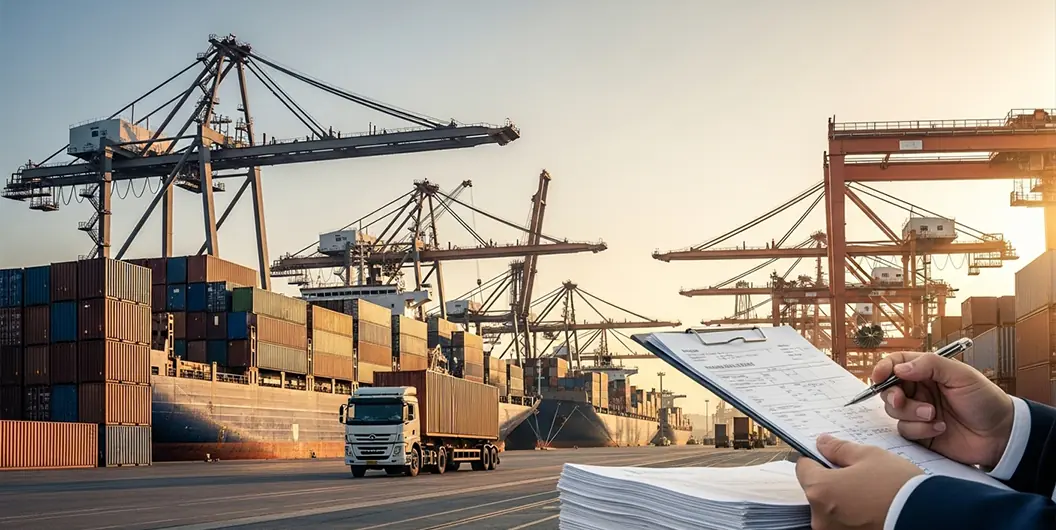
Today, due to its unique geographical position, Turkey has become Iran's bridge to the markets of Europe and Central Asia. A precise understanding of the country's legal, customs, and logistical environment is the key to success in your import and export transactions.
The trade volume between Iran and Turkey was recorded at $17 billion in 2023, demonstrating the high potential for cooperation between the two nations in the exchange of goods and services.
Trade Opportunities with Turkey:
-
Access to a consumer market of 85 million people and continuous growth in domestic demand
-
Container and Ro-Ro shipping network from Iranian ports to Mersin and Izmir to reduce shipping time and cost
-
Reliable land borders, primarily Gürbulak (Bazargan) and Esendere (Sero), for quick and easy customs clearance
-
Membership in regional free trade agreements for tariff exemptions and reduced customs duties
Steps for Importing Goods into Turkey
-
Market Research and Product Identification: Analyzing competitors, consumer needs, and competitive prices on official Turkish platforms.
-
Defining the Tariff Code (HS Code): Accurately determining the HS Code for correct calculation of customs duties and Value Added Tax.
-
Obtaining Permits and Certificates: Acquiring IGE (Import Communiqué Annex) permission, CE standard, health certificates, and technical permits required for each product.
-
Arranging Shipping Documents: Ordering containers or Ro-Ro and obtaining the Bill of Lading (B/L) for sea routes or road waybills.
-
Customs Procedures and Clearance: Submitting the electronic declaration, Commercial Invoice, Packing List, and Certificate of Origin.
-
Final Delivery to Warehouse or Customer: Transferring the cargo after clearance to a refrigerated or general warehouse for delivery.
Steps for Exporting Goods to Turkey:
-
Selecting the Target Product: Goods such as petrochemicals, agricultural products, handmade carpets, and industrial parts with high demand.
-
Negotiation and Signing the Sales Contract: Determining payment terms (LC, T/T, D/P) and delivery windows.
-
Packaging and Cargo Preparation: Complying with European Union packaging standards and bilingual labeling.
-
Transport to the Customs Area: Sending goods via road, rail, or combined transport to ports or border terminals.
-
Export Procedures and Issuing the Certificate of Origin: Submitting the electronic export declaration and Chamber of Commerce confirmation.
-
Payment Settlement and Cargo Handover: Receiving the remaining payment as per the contract and providing final documents to the buyer.
Turkish Customs Laws and Tariffs:
-
Accurate classification of goods in the HS system to determine import duties.
-
Calculating customs value based on CIF or FOB.
-
Value Added Tax (VAT) at rates of 17% or 18%, depending on the type of goods.
-
Costs of customs procedures and penalties for late declaration of documents.
-
Import restrictions and prohibitions (specific foodstuffs, narcotics, and environmental goods).
-
Benefiting from tariff exemptions under preferential agreements.
Transportation Methods:
-
Road: The fastest method for small and medium-sized goods via the Gürbulak–Esendere route.
-
Sea: The most economical option for 20- and 40-foot containers.
-
Rail: Combined with road transport for bulky and heavy goods.
-
Air: Suitable for time-sensitive shipments at a higher cost.
Key Points in Choosing Incoterms:
-
FOB (Free On Board): The seller is responsible until loading.
-
CIF (Cost, Insurance, Freight): The seller covers the cost of insurance and freight.
-
EXW (Ex Works): Minimum seller obligation (delivery at the factory).
-
DAP (Delivered At Place): The seller is responsible up to the buyer's specified place.
-
DPU (Delivered at Place Unloaded): Loading and unloading are the seller's responsibility.
Why Zarsan Global?
-
Successful experience in dozens of Iran–Turkey commercial projects.
-
Extensive network in the ports of Mersin, Izmir, and Istanbul.
-
24/7 support and transparent reporting at every stage.
-
Value-added services including standard packaging and cold storage.
-
Guarantee of compliance with the latest customs laws and technical standards.
Zarsan Global's team of experienced specialists is ready to bring your commercial projects to fruition with the highest level of quality and speed.