



Your investment in Turkey, whether through property purchase or a bank deposit, was the first step on this journey. But now, you enter the "bureaucracy" phase or administrative follow-ups. This is where your paper file must be transformed into a national identity. According to the procedures current in 2025, this process usually takes between 3 to 6 months. In this article, we explain all the twists and turns of this path, from the stages of Turkish citizenship to the details of the Turkish citizenship interview.
Step 1: Obtaining the Certificate of Conformity (Uygunluk Belgesi)
Before any action, the Turkish government must confirm that your investment is "standard." This document, called the Certificate of Conformity, is the cornerstone of your file.
- If you bought property: The Land Registry and Cadastre Office (Tapu) must confirm that your property value is at least $400,000.
- If you have a bank deposit: The Banking Regulation and Supervision Agency (BDDK) must issue a $500,000 confirmation.
Note: One of the most important documents at this stage is the Foreign Exchange Purchase Certificate (Döviz Alım Belgesi). You must sell your foreign currency to the Central Bank, and the receipt must state that this was done for obtaining Turkish citizenship. Any discrepancy in the numbers on this document compared to the property deed amount will result in the immediate rejection of the file.
Step 2: Obtaining Short-Term Residence Permit
Many applicants assume they can apply for citizenship with a tourist residence permit, but this is a common mistake. You must change your residence type to 31/j.
- Main Difference: This residence is specifically for investors and, unlike regular residence permits, does not require a continuous physical presence in Turkey.
- Issuance Speed: This temporary ID card (Kimlik) is usually issued much faster than the normal routine to serve as a bridge for registering your citizenship file.
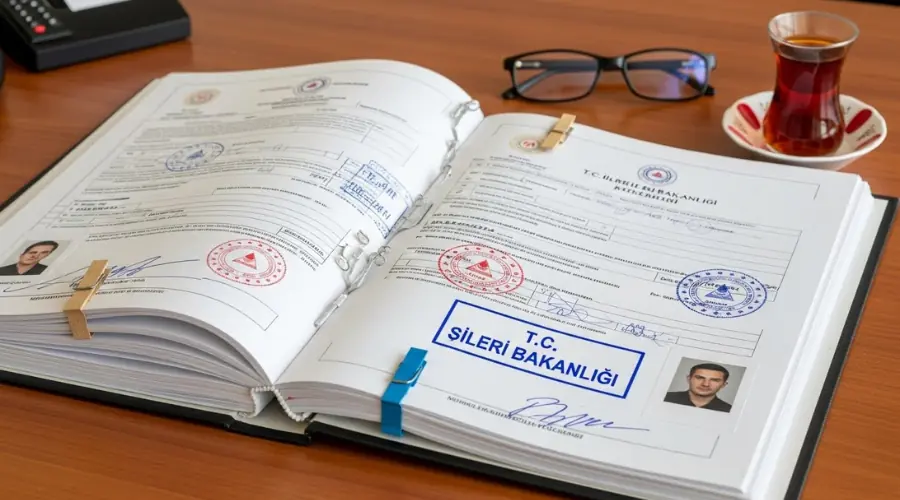
Step 3: Filing and Submission to the Civil Registry (Nüfus)
After receiving the special residence permit, it is time to aggregate the documents. At this stage, accuracy in translations is vital. The smallest mistake in names, for example, a one-letter difference between the passport and the birth certificate translation, can delay the file for months.
List of required documents for Turkish citizenship through investment:
- Application Form (VAT-4): Must be filled out carefully.
- Original and Translated Passport: Certified by a Notary.
- Birth Certificate and Identity Documents: For all family members (must have an Apostille stamp).
- Marriage or Divorce Certificate: To clarify civil status.
- Clear Criminal Record: From the country of origin.
- Biometric Photos: Specifically for Turkish government documents.
- Valid Health Insurance.
- Receipt of payment for government fees.
Step 4: Turkish Citizenship Interview
This is the most sensitive stage for many applicants. This is where the paper file is matched with your human identity.
What do they ask on the interview day?
Unlike regular paths that require 5 years of residence, in the investment path, the interview is mostly for identification and verification purposes. Questions usually include:
- Personal information (parents' names, spouse's and children's dates of birth).
- Source of income and your occupation outside Turkey.
- Your goal in choosing Turkey for living and investment.
- The exact address of the property you purchased in Turkey (be sure to memorize the address!).
Appropriate Attire and Behavior in the Interview
In the interview room, representatives from the Security Directorate and the Migration Management are present. Professional attire and respectful behavior have a positive impact on their final report.
Security Investigation (Archival Investigation)
This part is the "black box" of the process. Your file is sent to the National Intelligence Organization (MİT) and the Security Directorate to ensure the applicant is not a threat to national security or public order. This stage is the longest waiting period.
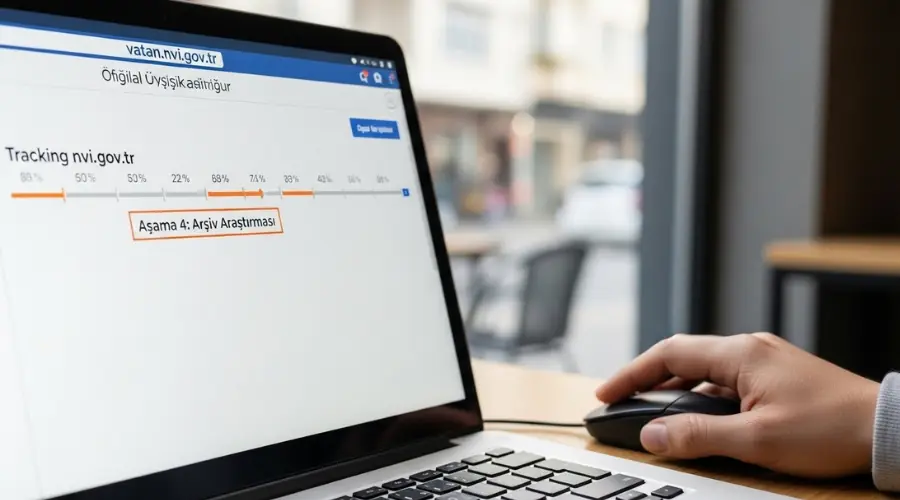
Step 5: Tracking the 7 Stages of Turkish Citizenship
After the interview, you will receive an "Application Number." By visiting the website vatan.nvi.gov.tr, you can monitor your status.
Decoding the 7 Stages of Citizenship:
- Registration: Your information has entered the central system (MERNİS).
- Sent to Headquarters: The file was sent from your city of residence to the General Directorate in Ankara.
- Preliminary Review: Ankara experts check technical and investment documents.
- Archive and Security Research: Inquiry from the police and intelligence organization.
- Placement on the List: Security approval has been issued, and your name is on the "Final Approval" list.
- Decision Making: The list is on the desk of the President or the Minister of Interior for final signature.
- Notification of Result: Announcement of your citizenship approval.
Step 6: Final Approval and Issuance of Registry Document
When you see the message for the seventh stage, you should visit the Civil Registry (Nüfus) of your province. At this stage:
- The official citizenship notification letter is handed to you.
- The system changes your ID number from 99 (foreign) to citizenship numbers.
- The final fingerprinting process is conducted.
Final Step: Receiving the Kimlik Card and Turkish Passport
Now you are a Turkish citizen!
- ID Card (Kimlik): After submitting the request, your smart card is sent by the post office (PTT) to your home address.
- Ten-Year Passport: You can apply for a passport immediately. Turkish passports in 2025 are biometric and issued with 10-year validity.
Key Points in the Citizenship Process
In this section, we cover details that might seem simple but failing to observe them can jeopardize all your efforts.
Possible Reasons for Rejection
The most important reason for rejection is lack of transparency in the source of funds or the existence of suspicious financial transactions. Also, if a person is on Interpol watchlists or has deportation records from Turkey in past years, they will face rejection. Another very important point is the three-year commitment; if you sell your property before the end of 3 years, your citizenship will be immediately revoked.
The Role of a Lawyer in Administrative Follow-ups
Legally, a lawyer is not mandatory, but since all correspondence and stages are in Turkish, having an experienced lawyer reduces the risk of translation errors or document deficiencies to zero. A lawyer can follow up with the Civil Registry in Ankara during the security research stage, which usually takes a long time, to speed up the process.
Name and Surname Change Laws
The Turkish government allows you to change your name and surname to Turkish ones simultaneously with receiving citizenship. If you intend to do this, do not forget two points:
- Turkish Alphabet: The new name must not contain letters like W, X, or Q as they do not exist in the Turkish alphabet.
- Name Equality Certificate (İsim Denklik): Be sure to obtain this document. This paper proves that your "new name" in Turkey and your "old name" in your previous passport belong to the same person. Without this document, you will face legal problems in your own country later for matters like inheritance.
Knowledge of the Turkish Language
Many worry whether they must know Turkish for citizenship. The answer is no. For investors, language proficiency is not a legal requirement. However, it is recommended to learn very simple phrases like greetings or introducing yourself in Turkish for the interview day. This shows your respect for Turkish culture and has a very positive effect on the case officer.
Approximate Timeline for Turkish Citizenship Stages
| Stage Name | Responsible Authority | Approx. Waiting Time |
|---|---|---|
| Obtaining Certificate of Conformity | Land Registry / Bank | 2 to 4 weeks |
| Issuance of 31/j Residence | Migration Management | 3 to 5 weeks |
| Security and Archive Research | Intelligence and Security Org. | 3 to 5 months |
| Presidential Signature | Presidency Office | 2 to 8 weeks |
| Passport and ID Issuance | Civil Registry and PTT | 1 week |
Final Checklist for Turkish Citizenship Interview
- Original current passport and certified copy.
- Appointment paper (Randevu).
- Investment-related documents (Deed or bank confirmation).
- Official translation of birth certificates with Apostille.
- New biometric photos (6 pieces recommended).
- Payment receipt for "Citizenship Services" fees.
Conclusion
Obtaining Turkish citizenship is not just a financial investment, but a major change in your lifestyle and legal identity. By following the tips mentioned in this guide and having strategic patience during the security research stage, you can successfully complete this path.