


Imagine you have converted all your savings into a stable foreign currency, sold your car and assets, and headed to Turkey with the hope of a peaceful life. But three months later, in the corridors of the Migration Management (Göç İdaresi), you are faced with a "residency permit rejection" notice, or you realize that the rent for a house you saw on the "Sahibinden" website is double for foreigners.
Migrating to Turkey is no longer just a leisure trip for international expats; it is a strategic decision to preserve capital value and quality of life. However, Turkey in 2026 is vastly different from Turkey five years ago. Lira inflation, stricter residency regulations, and seismic risks have changed the equations. In this article, from the perspective of a realistic consultant, we review Turkish cities based on the budget and conditions of an international immigrant.
1. Anatomy of Costs: The Survival War in Megacities (2026 Update)
Your first question is: "How much should I spend?". Do not forget that Turkey's inflation (TÜİK) remains high and prices change monthly. The following figures are calculated based on the economic realities of 2026.
Istanbul: The Expensive and Bustling Giant
Istanbul is the beating heart of the economy, but it is unforgiving. If you do not have a dollar-based income or strong financial backing from your home country, Istanbul can swallow your capital.
- Housing Rent: For a one-bedroom unit (1+1) in average neighborhoods like "Esenyurt" or "Beylikdüzü", you must pay at least 15,000 to 20,000 Lira per month. In central areas like "Şişli" or "Beşiktaş", this figure easily exceeds 45,000 Lira.
- Transportation: Istanbul has heavier traffic than many other global metropolises. The monthly cost for a metro and bus card (Mavi Kart) is about 2,750 Lira.
- Who is it suitable for? Large investors, high-level professionals, and those who love urban hustle and bustle.
Ankara: The Gray but Stable Capital
Ankara is like a disciplined employee wearing a pressed suit. It lacks the excitement of Istanbul and has no sea, but it offers "order" and "reasonable prices".
- Housing Rent: About 30 to 40 percent cheaper than Istanbul. You can get a house in good areas for 12,000 to 18,000 Lira.
- Cost of Food: Due to its proximity to the agricultural centers of Central Anatolia, the price of fruits and vegetables is more logical.
- Who is it suitable for? Students, families looking for peace and security, and those with a more limited budget.
Izmir: The Hub of Intellectual Calm
Izmir is the cradle of intellectualism and peace. It has laid-back people and a more secular atmosphere.
- Cost of Living: Somewhere between Ankara and Istanbul. Rents are increasing but are still more logical than in Istanbul.
- Transportation: Smoother traffic and a very efficient sea transportation system (Vapur).
- Who is it suitable for? Those escaping the heavy traffic of megacities and looking for high quality of life near the sea.
Antalya: The Dollar Paradise
Antalya is no longer cheap. The influx of international residents has exploded property prices in this city. Although rents have adjusted slightly, side costs are high.
- Note: The cost of "cooling" in summer (24-hour air conditioning) will make your electricity bill astronomical.
2. Forbidden Zones (Kapalı Mahalleler): The Trap That Destroys Your Capital
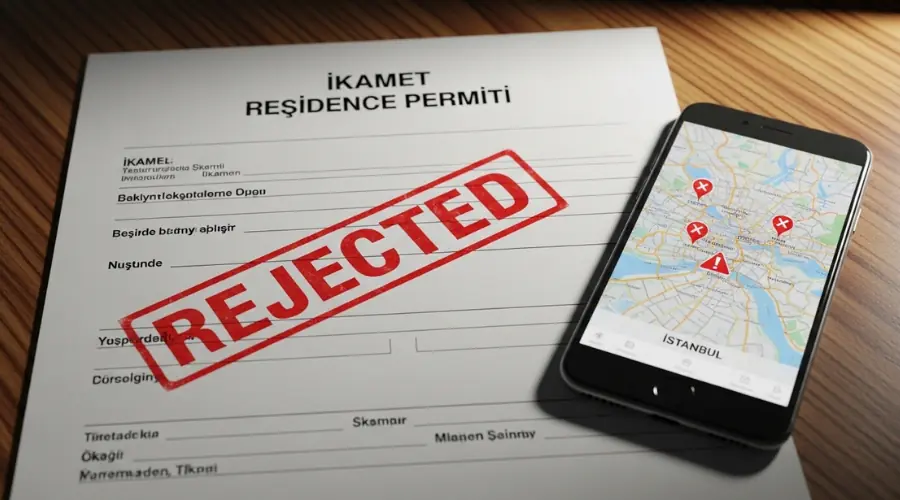
This is the most vital part for foreign nationals. According to the "20 percent" rule, if the foreign population in a neighborhood exceeds 20% of the total population, the government closes that neighborhood for new residency applications.
Serious Warning: If you rent or even buy a house in these neighborhoods, no residency permit will be granted to you.
2026 Blacklist (Some of the most important):
- Istanbul: All neighborhoods in the Fatih and Esenyurt districts. Also, popular areas for foreigners like Şişli, Beşiktaş, and Sarıyer have many forbidden neighborhoods.
- Antalya: Liman, Hurma, and Sarısu neighborhoods in Konyaaltı.
- Alanya: The popular Mahmutlar neighborhood.
Solution: Before signing any contract (Sözleşme), be sure to inquire if the neighborhood is open to foreign nationals by visiting the Migration Management website or the local municipality. Do not trust the real estate agent (Emlakçı) who says "it can be fixed."
3. Physical Safety: Earthquake Map and Safe Cities
After the devastating Kahramanmaraş earthquake, the fear of earthquakes among foreign residents is very serious. Turkey is located on active fault lines.
-
High-Risk Areas (Red):
- Istanbul: Especially the southern areas near the Sea of Marmara (such as Avcılar, Zeytinburnu). The North Anatolian Fault is a serious threat to this city.
- Izmir: This city is also on active faults in western Turkey and has a history of severe earthquakes.
-
Safe Areas (Green and White):
- Ankara: One of the safest large cities in Turkey in terms of seismicity.
- Konya and Karaman: In the central plateau and away from major faults.
- Black Sea Coastal Cities: Such as Trabzon, Rize, and Sinop (very low risk).
- Alanya: Unlike Antalya, parts of which carry risks, the city of Alanya itself is located on a safer tectonic plate.
Construction Standard: If you insist on living in Istanbul, be sure to choose buildings constructed after 2018 (Turkey's new earthquake regulations).
4. Freelancing and Digital Nomad Life: Internet and Workspace
Many foreign immigrants are programmers or traders. You should check the eligibility for Turkey's Digital Nomad Visa based on your nationality. Otherwise, you must obtain residency through other methods (tourist, real estate purchase, student).
- Internet Speed: Istanbul leads with fiber optic infrastructure (Superonline and TurkNet). The average download speed is 50 Mbps.
- Shared Workspace:
- Istanbul: Kolektif House and Workinton have many branches and are hubs for startups.
- Izmir: Workspaces in the "Alsancak" and "Bostanlı" neighborhoods are growing.
- Access Challenges: In Turkey, YouTube and Instagram are open, but sometimes access to some home-country banking sites might be restricted, requiring a dedicated IP from your origin.
5. The Other Side of the Coin: Winter in Tourist Cities (Antalya and Alanya)
Forget Instagram photos. Living in coastal cities in winter has strange challenges:
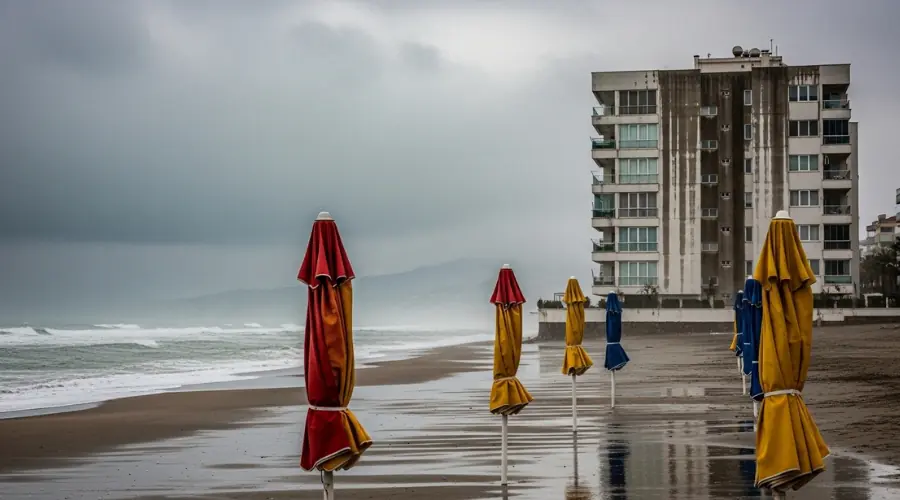
- Ghost Town: In Alanya and tourist areas of Antalya, with the end of the tourist season (mid-November), the city becomes semi-closed. Many restaurants and clubs close.
- Heating Problem: Most coastal houses do not have a central heating system (radiators) and are only heated by air conditioning.
- Electricity Cost: Heating a house with electricity in Turkey is very expensive. Your winter electricity bill may exceed 3,000 Lira.
- Humidity and Mold: Coastal houses in winter are highly susceptible to "Rutubet" (humidity) and wall mold, which is harmful to health.
6. Real Labor Market: Industrial Hubs (Bursa and Kocaeli)
If you are "handy," a technical worker, or a mechanical/electrical engineer, Istanbul and Antalya are not the places for you. The money is in industry.
- Bursa and Kocaeli (Izmit): These two cities are the hubs of the automotive industry (Fiat, Renault, Ford) and Turkey's heavy industries.
- Opportunities: Factories always need skilled technical labor (lathe operators, welders, electrical technicians).
- Income: The minimum wage for 2026 is about 22,000 Lira, but a skilled technical worker in these cities can earn up to 40,000 Lira and more.
- Important Note: Working in these cities requires a work permit (Çalışma İzni) and supervision is stricter than black-market restaurant jobs in Istanbul.
Frequently Asked Questions (FAQ)
1. Can I get residency by buying a cheap house in small towns? No. According to the new laws, to obtain real estate residency in large cities, the property value must be at least $75,000, and in small cities, $50,000 (these figures are constantly changing and increasing towards $200,000). Buying cheap rural houses usually does not lead to residency.
2. Which city is better for learning the Turkish language? Smaller and non-tourist cities like Ankara, Izmir, or Eskişehir. In Istanbul and Antalya, due to the large number of foreigners, months may pass without a serious need to speak Turkish, which slows down the learning process.
3. Can I take my personal car with foreign plates to Turkey? Yes, you can bring the car and drive it in Turkey for a period of up to 2 years under specific conditions. However, the price of gasoline in Turkey (about 45 Lira per liter) is very high, and practically using a personal car daily is not cost-effective.
Final Word and Roadmap
There is no "best city"; there is the "most suitable city for you."
- If you have a lot of capital and are looking for business and international connections: Istanbul.
- If you are a student or want a limited budget and high security: Ankara.
- If you are retired or have a dollar income and love the Mediterranean: Alanya/Antalya (considering forbidden neighborhoods).
- If you are a technical worker and looking for real work: Bursa or Kocaeli.
Final Recommendation: Before breaking all ties in your home country, go to your desired city with a tourist visa, live in ordinary neighborhoods (not luxury hotels), check prices in BIM and A101 supermarkets, and then make a final decision. Migration with open eyes is the only way to save your capital.