



Many foreign nationals choose Turkey as their second home, but the country's immigration laws are not always straightforward. Unlike property investment methods which offer a faster route, family-based paths such as citizenship by marriage or citizenship status by birth come with specific legal and security nuances. This article is organized based on Turkish Citizenship Law No. 5901 and the latest changes in 2025 to serve as a precise roadmap for you.
Turkish Citizenship by Marriage (The 3-Year Rule)
In the past, marrying a Turk led to an immediate passport, but the law has changed to prevent "sham marriages." Under the current law, marriage is merely the key to entry, and you must pass a 3-year probationary period.
1. Three Main Conditions for Application (Article 16)
For your application to be accepted, you must meet the following 3 conditions simultaneously:
- Time Requirement (3 Years): At least 3 years must have passed since your official marriage date, and you must still be married at the moment of receiving citizenship. (Engagement periods do not count).
- Place Requirement (Cohabitation): The couple must genuinely live together. The registered address of both spouses at the Population Directorate must be the same. Separation is only accepted in special circumstances like military service, illness, or mandatory government assignment.
- Moral Requirement (Good Conduct): You must not engage in behavior suggesting the marriage is fake (such as prostitution or moral abuse). Recorded domestic violence can also ruin the case.
Important Note: Your marriage must be official and legal. Solely religious marriages or polygamy are illegal in Turkey and have no value for citizenship.
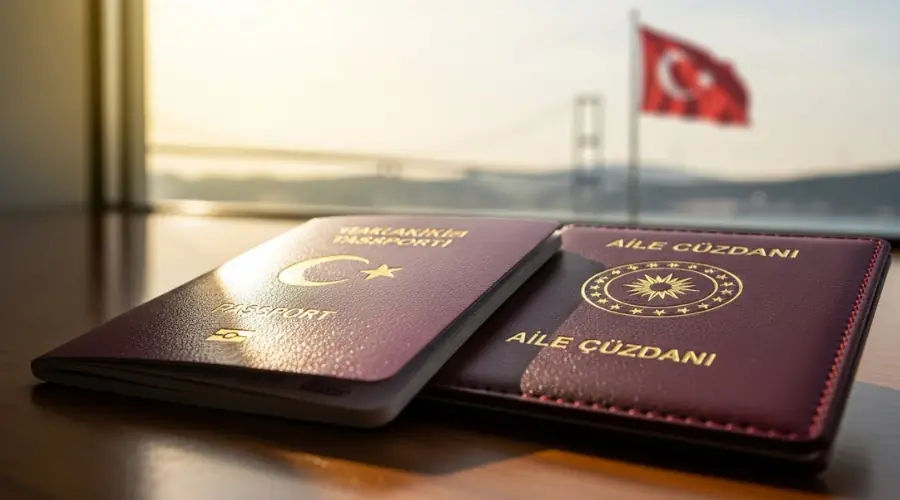
2. Required Documents for Citizenship via Marriage
Collecting documents accurately is half the battle. Missing documents cause long delays:
- Application Form (VAT-6): Typed or written in capital letters.
- Passport: Original and notarized translation (valid for at least 6 months).
- Birth Certificate: Translated and approved birth certificate from your home country.
- Turkish Spouse's Identity Register (Vukuatlı): Must include full family details.
- Marriage Booklet (Red Book): Copy of the ID pages.
- Valid Residence Permit: Copy of both front and back.
- Criminal Record: Both from Turkey (e-Devlet) and your home country (translated).
- Biometric Photos: 4 copies (white background).
- Service Fee Receipt: Paid to the Treasury (Maliye).
- Proof of Cohabitation: Joint lease agreement, joint bank account, family photos.
Special Note on Document Legalization: If your country is a member of the Apostille Convention, apostilling your documents is sufficient. If not, your documents must go through a chain legalization process: 1. Ministry of Foreign Affairs in your country, 2. Turkish Consulate, and 3. Governor's Office (Valilik) in Turkey.
3. Police Investigation and Interview
To ensure the marriage is genuine, the Turkish government has two strict control stages:
A) Police Investigation (Home Visit):
The police may visit your home unannounced or ask neighbors about you. They look for signs of living together:
- Are men's and women's clothes together in the wardrobe?
- Are there two toothbrushes in the bathroom?
- Is the bed a double bed and actually used?

B) Commission Interview (Governorate):
This stage is like an oral exam. Usually, the couple is separated and asked detailed questions to find contradictions.
Sample Questions: What is the color of the sofas? What did you eat for dinner last night? Does your spouse prefer tea or coffee? What was the last gift you gave each other?
Citizenship by Birth
Many foreigners assume that if a child is born in Turkey, the baby gets a Turkish passport (similar to the US), but this assumption is incorrect.
1. Jus Sanguinis (Right of Blood)
Turkey follows the principle of Jus Sanguinis (blood), not Jus Soli (soil).
- If one parent is Turkish: The child is a Turkish citizen regardless of where they are born in the world.
- If both parents are foreigners: A child born on Turkish soil does not become a Turkish citizen and acquires the citizenship of their parents.
Exception: A Turkish passport is given to a foreign baby only if they are at risk of being "stateless." However, since most countries pass citizenship through parents, foreign babies typically do not fall under this exception.
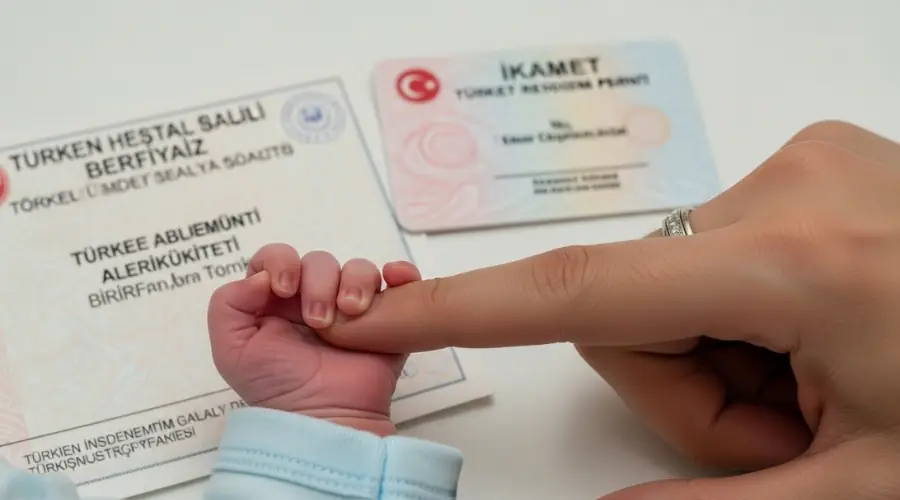
2. Duties of Foreign Parents After Birth in Turkey
If you and your spouse are foreign nationals and your child is born in Turkey, you must complete the following steps quickly to avoid penalties:
- Obtain Birth Report: Get this from the hospital (Names must match passport rules exactly).
- Register at Population Office: Go to the Population Directorate (Nüfus) with the birth report and your passports to register the birth.
- Consulate Procedures: Apply to your country's consulate to get a passport for the baby.
- Baby's Residence Permit (Crucial): The baby can stay without a permit for up to 6 months. You must obtain a residence permit for them before the 6 months are up. Otherwise, you will face heavy fines upon exit.
Part Three: Special Circumstances and Challenges
1. Impact of Divorce or Death of Spouse
- Death of Spouse: If the Turkish spouse passes away before the process is complete, the law is lenient, and your citizenship process continues (provided there are no security issues).
- Divorce:
- Before Citizenship: The application is cancelled.
- After Citizenship: If it is a normal divorce, citizenship remains. However, if it is proven that the marriage was fake from the start, citizenship is revoked.
- Domestic Violence: If you had to leave the house due to violence and have a police/medical report, this will not be used against you as "abandonment of the home."
2. Banking and Military Service Obligations
- Opening a Bank Account: For foreigners to open a bank account, a valid residence permit, tax ID number, and a registered address are required. Some banks may additionally request a deposit.
- Military Service: Males under 22 who become Turkish citizens are subject to military service. However, if you have served in your home country or are exempt, you may be exempt from military service in Turkey by documenting this (based on the principle of reciprocity or exemption under Article 22 of the Military Law).
Summary and Conclusion
Obtaining Turkish citizenship via marriage requires patience, genuine family life, and meticulous documentation. Honesty in the interview and complete documents are the keys to passing the security investigation. Regarding citizenship by birth, be aware that being born on Turkish soil does not provide an advantage on its own, and you must act immediately for the baby's residence permit.
| Topic | Citizenship by Marriage | Citizenship by Birth (Foreign Parents) |
|---|---|---|
| Main Condition | 3 years of genuine family unity | One parent must be Turkish |
| Time to Receive | After 3 years + administrative processing | (Not applicable) |
| Cost | Administrative fees and translation | (Not applicable) |
| Effect of Divorce | Before citizenship: Application cancelled | (Not applicable) |
| Residence Permit | Yes, mandatory during the 3 years | Yes, must be obtained for the baby |