


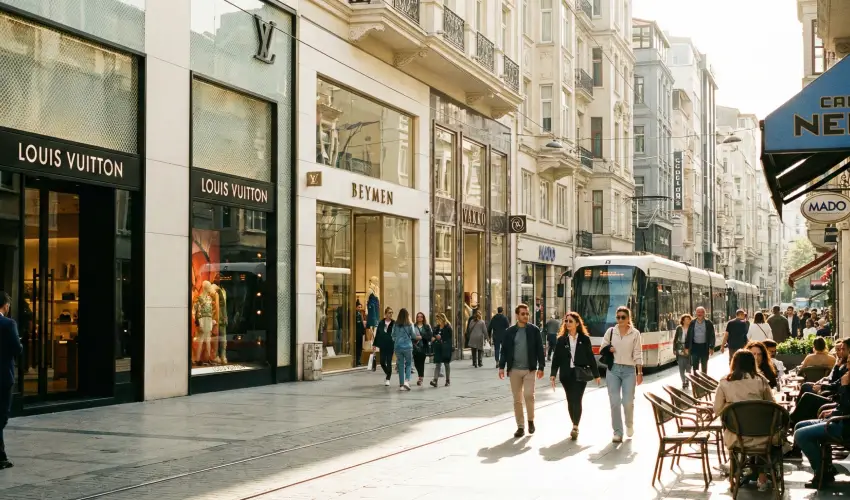
On the global investment map, Turkey stands out as one of the most dynamic emerging markets, playing a strategic role in the development of franchise models. With a population exceeding 85 million—largely composed of young people and a consumption-driven middle class—alongside hosting more than 50 million tourists annually, the country provides an exceptional platform for international brands. Franchising in Turkey is not merely a distribution model; it is a powerful tool for global investors to gain access to the markets of the Middle East, the Balkans, and Central Asia. Relative stability in commercial regulations aligned with European Union standards, combined with Istanbul’s geopolitical appeal, has turned Turkey into an ideal destination for those seeking portfolio diversification and long-term foreign-currency returns (USD/EUR).
Chapter One: Dissecting Turkey’s Franchise Market from an International Perspective
Turkey’s franchise industry—with an annual turnover exceeding USD 50 billion—is dominated by food and beverage (F&B), apparel retail, and modern services. For international investors, understanding the distinction between a Master Franchise and a Single-Unit Franchise is critical. A master franchise allows the investor to act as the exclusive representative of a global brand across the entire territory of Turkey and to recruit sub-franchisees; this model is particularly attractive to large holding groups seeking market dominance. On the other hand, operational franchises in sectors such as chain cafés (including Starbucks or premium local brands like Mado) benefit from Turkey’s strong coffee culture and social interaction habits, resulting in highly stable returns on investment (ROI). Advanced logistics infrastructure and a robust domestic supply chain significantly reduce operating expenses (OPEX) compared to European markets, thereby increasing net profit margins.
Chapter Two: Legal Framework and Compliance with Global Standards
Although Turkey does not have a specific law titled “Franchise Law,” franchise relationships are governed under modern commercial regulations, including the Turkish Commercial Code and the Code of Obligations, both heavily influenced by Swiss and German law. For global investors, this translates into a predictable judicial system that strongly protects intellectual property rights (IPR). Registering a trademark with the Turkish Patent and Trademark Office (TÜRKPATENT) is the first strategic step for any foreign investor. Franchise agreements in Turkey must be drafted with particular care regarding non-compete clauses, confidentiality, and exclusive territory provisions. Unlike many emerging markets, Turkey allows parties to resort to international arbitration in Istanbul or European centers in the event of major disputes, providing a high level of legal certainty and peace of mind for foreign capital.
Chapter Three: Financial Engineering — Currency Arbitrage and Inflation Management
One of the most attractive yet complex aspects of investing in Turkish franchises is managing fluctuations of the Turkish lira (TRY) against benchmark currencies (USD/EUR). International investors entering with foreign currency enjoy substantial purchasing power during the setup and launch phase (CAPEX). While expenses such as rent and staff salaries are paid in lira, many leading international brands in Turkey have successfully structured their pricing strategies to keep pace with inflation and preserve the dollar value of net profits. Financial analyses show that in sectors such as health tourism and apparel, revenues have strong potential to be denominated in foreign currency, while costs remain local. This pricing gap creates a unique arbitrage opportunity that is virtually impossible in saturated European or North American markets. Return on investment for reputable franchises in Turkey is typically estimated at 24 to 36 months, compared to a global average of around 60 months.

Chapter Four: High-Growth Sectors for Global Investment
Logistics Technologies and Rapid Delivery
Following the global success of brands such as Getir, franchises related to dark stores and urban logistics demonstrate explosive growth potential.
Tourism and Hospitality
Mid-range hotel franchises and boutique hotels in cities like Istanbul, Antalya, and Izmir benefit from constant global tourist demand, ensuring stable foreign-currency cash flows.
Health and Beauty
Chain clinics specializing in hair transplantation and dentistry under reputable international brands attract clients from across Europe and the Gulf region, driven by Turkey’s reputation as a global hub for medical tourism.
International Education
Franchises of international schools and digital skills training centers serve Turkey’s large expatriate community and local elites, representing a secure and high-prestige market.

Chapter Five: Risk Management and Market Entry Strategy for Foreign Investors
For global investors, entering the Turkish market requires a “glocal” (global–local) approach. The greatest risk in Turkey lies not in legislation, but in understanding local consumer behavior. Collaboration with local consultants who are fluent in international languages and maintain strong relationships with the Turkish Franchise Association (UFRAD) is essential. Investors should also leverage government incentives such as Turkish Citizenship by Investment (TCBI), which can be facilitated through business establishment and the employment of a specified number of local staff.
Strategic Checklist for International Investors
- Supply chain assessment: Are raw materials dependent on imports, or produced domestically in Turkey? (Local sourcing = lower currency risk)
- Site selection analysis: In cities like Istanbul, sales performance on two adjacent streets can differ by more than 100% due to tourist traffic patterns.
- Cultural adaptation: Even global brands such as McDonald’s have adapted their menus to Turkish tastes. Evaluating the parent brand’s flexibility for localization is essential.
- Exit strategy: Ensure that the franchise agreement allows the future sale of the franchise unit to another investor.

Conclusion: The 2026 Outlook — Turkey as a Franchise Haven
Investing in franchises in Turkey goes far beyond a simple commercial activity; it is a strategic move to position oneself at one of the world’s key intersections of global trade. Despite macroeconomic challenges, the country’s strong consumer base and industrial infrastructure continue to attract global brands expanding their footprint. For investors entering the market with a long-term vision and strong foreign-currency backing, Turkey offers a rare combination of managed risk and above-average returns. The future of Turkey’s economy is closely tied to modern distribution networks—and franchising is the golden key to accessing them.