


Introduction: Why Is Turkey the New Trade Gateway for Global Business?
At the beginning of the third decade of the twenty-first century, Turkey is no longer just a geographical neighbor; it has transformed into a vital artery for economic respiration and the sole secure route for accessing global markets. For international investors and entrepreneurs who have been grappling with global sanctions and banking deadlocks for years, Istanbul and Ankara are far more than tourist destinations. These cities are now considered reliable launchpads towards free trade.
However, entering this complex and evolving market requires moving beyond traditional assumptions. Many traders enter Turkey with the mindset of their home country's laws, searching for concepts like a "physical commercial card." However, it is crucial to know that in the modern Turkish Commercial Code, the concept of a commercial card as it exists in some other jurisdictions is not defined.
In Turkey, the ability to trade is not a separate privilege granted to an individual, but an inseparable part of the "legal personality" born only through company registration. This analytical report bridges the gap between laws on paper and the operational realities of the Turkish market in 2025 and 2026, familiarizing you with fundamental changes in costs and regulations.
Chapter One: What Is the Turkish Commercial Card?
Does a Physical Commercial Card Exist in Turkey?
In the administrative systems of many countries, a merchant needs to present a physical "Commercial Card" to clear goods from customs. This mindset has led thousands of foreign entrepreneurs down the wrong path or into the trap of unofficial consultants by searching for "obtaining a commercial card in Turkey." The reality is that in Turkey, the term "Commercial Card" can refer to two different documents, neither of which is exactly equivalent to the versions found in other nations.
The first document is the Merchant ID Card (Tacir Kartı). This is a smart card issued by the Chamber of Commerce (e.g., ITO in Istanbul). Contrary to popular belief, this card is not an import or export license; it is merely an identity document proving the holder's membership in the Chamber of Commerce. Its use is mostly for accessing social facilities and proving commercial credibility at embassies for visa applications.
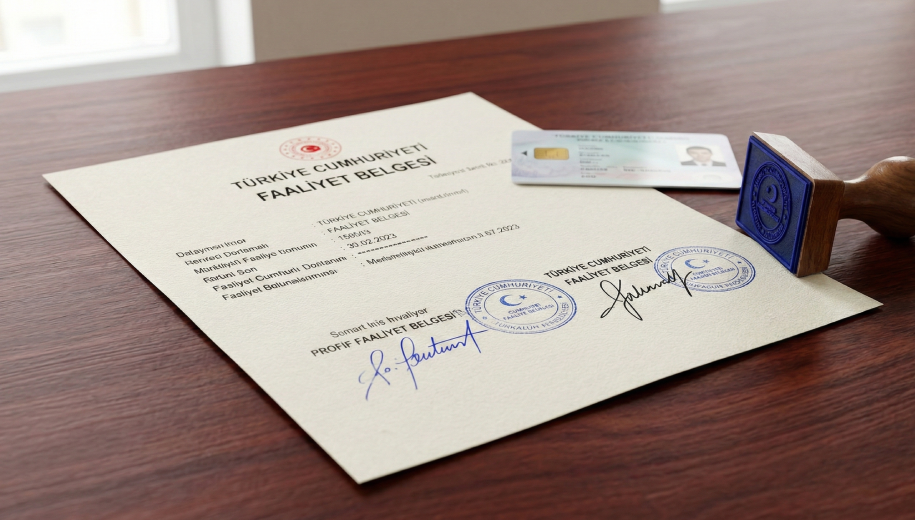
The second document, which holds legal significance, is the Certificate of Activity (Faaliyet Belgesi). This is the document that customs and banks will ask for. The Certificate of Activity confirms that your company is active, not bankrupt, and possesses signatory powers. Therefore, the power that foreigners seek in a "commercial card" lies within the "Official Gazette of Establishment" and the "Certificate of Activity" in Turkey.
Strategic Differences in Trade: International vs. Turkey
Understanding the fundamental differences between systems is the cornerstone of your success. In some countries, commercial cards have import caps and rankings. However, in Turkey, limitations are defined based on "Registered Capital" and "Bank Credibility."
In Turkey, the principle is "Freedom of Trade"; meaning every registered company has the right to export or import any legal good, except for specific items like medicine or weapons. Here, the bureaucracy for starting a business is lower, but tax and accounting supervision for continuing operations is applied much more strictly than in many other regions.
Chapter Two: Choosing Company Structure; Limited or Joint Stock?
To navigate the road of trade in Turkey, choosing the right "legal vehicle" is vital. A wrong choice between a Limited Liability Company (LTD) and a Joint Stock Company (A.Ş.) can lead to heavy tax liabilities.
Limited Liability Company (LTD): Popular but with Unlimited Liability for Managers

This structure is the most common type for small and medium-sized businesses, and about 90% of foreign companies in Turkey are of this type. In this model, the company can have a minimum of one and a maximum of 50 partners. The important point in 2026 is the increase in minimum capital. According to new laws, the minimum capital has increased from 10,000 Liras to 50,000 Turkish Liras. Of course, to establish bank credibility, it is recommended to set the initial capital at a minimum of 500,000 Liras.
But what is the Achilles' heel of this company type? A point many do not know is that in an LTD company, managers have unlimited liability for public debts (taxes and social security). This means if the company does not pay taxes, the tax office can seize the personal assets of the manager.
Joint Stock Company (A.Ş.): A Fortress for Investors
For larger projects, the Joint Stock Company is the superior option. The minimum capital for these companies has increased to 250,000 Turkish Liras in 2026. The golden advantage of a Joint Stock Company is that shareholders (if they are not board members) have absolutely no responsibility for the company's tax and insurance debts. Also, share transfer is much simpler and less costly.
Chapter Three: Step-by-Step Company Registration and Permits
Registering a company and obtaining trading capabilities in Turkey is a process that takes between 5 to 10 working days. This path includes several important administrative stations.
1. Drafting Articles of Association in MERSIS
Everything starts with the Central Registry System. A key point for optimizing the Articles of Association is that in the "Subject of Activity" section, activities should not be written restrictively. Phrases like "general trading" and "import and export of all legal goods" should be included so that you don't need to amend the articles and pay extra fees for importing a new product in the future.
2. Notary (Noter) and 2026 Costs
Notaries are the beating heart of Turkish bureaucracy. Passports of all foreign partners must be translated and notarized. Be aware that according to 2026 tariffs, notary fees have increased significantly. For standard Articles of Association, notary fees can easily exceed 5,000 Liras.
3. Tax Number and Signature Circular (Imza Sirküleri)
After registration with the Chamber of Commerce and publication in the Official Gazette, it is time for the most important document for a foreign merchant: the "Signature Circular." The General Manager must register their signature sample at the notary. Without this document, opening a bank account, clearing goods, or even buying a corporate SIM card is impossible.
Chapter Four: Hidden and Visible Costs (2026 Budgeting)
Many investors only see the initial registration cost and overlook ongoing expenses. Below, we review the real costs.
Establishment Costs (One-time Payment)
Includes initial capital (minimum 50k Liras for LTD), notary fees, Chamber of Commerce registration, Official Gazette, and consultant fees. To start work in 2026, you should consider a budget between 30,000 to 60,000 Liras (excluding initial capital).
Monthly Hidden Costs (Running Costs)
This is where many startups fail. You must pay the monthly fee for a Sworn Financial Advisor (Mali Müşavir), Bağ-Kur (self-employment insurance) premiums, and various stamp taxes. Also, if you have a physical office, the withholding tax on rent (Stopaj), which is equivalent to 20% of the rent, will be a heavy cost. Using Virtual Offices is a legal solution to eliminate this tax cost.
Chapter Five: Banking Challenges and Overcoming Barriers
Opening a bank account for foreigners is the hardest stage of the process. Banks operate based on the nationality of the "Ultimate Beneficiary" and tend to be conservative.
Strategy of State Banks (Ziraat and Vakıf)
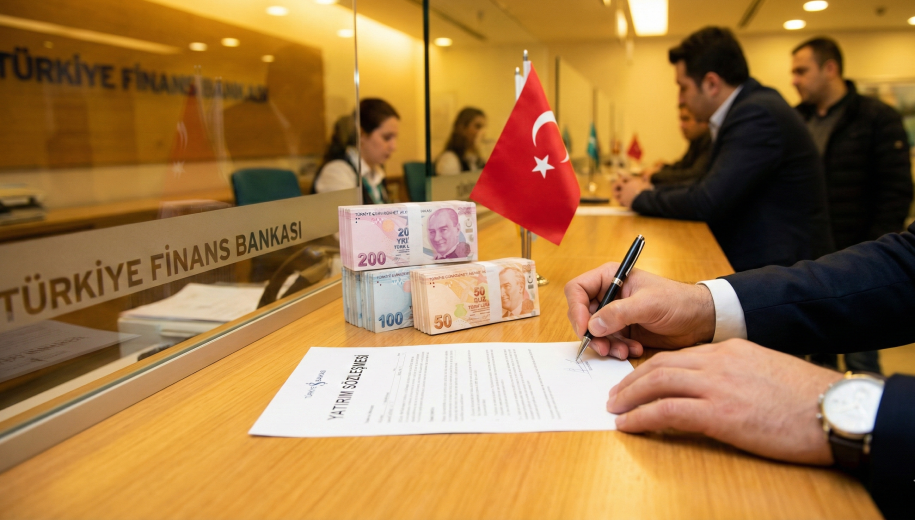
Ziraat Bank and VakıfBank remain the main options for foreigners. However, visiting crowded branches in central hubs usually leads to a dead end. The right strategy is to visit branches in quieter commercial districts. Also, most banks may request blocking a certain amount (Deposit) for a period of 1 to 3 months.
Vital New Documents
In addition to company documents, banks may require a utility bill (translated) from your residence in your home country to verify your real address. Also, having a transparent Business Plan explaining the source of funds is key.
Chapter Six: Export/Import Operations and the Role of Unions
After company registration and account opening, it's time for trade. Here, the concept of a commercial card makes sense in the form of "Membership in Exporters' Unions" (İhracatçı Birlikleri).
By law, every exporter must be a member of the union related to their goods. Without a membership number in this union, the customs system does not allow the registration of an export declaration. Also, for imports, documents like the Certificate of Origin and Control Certificate (for food and chemicals) are vital. If goods are coming from Europe, the ATR document provides customs exemption, which is a major advantage for Turkish companies.
Chapter Seven: Residency and Citizenship via Company Registration
Many imagine they will immediately get a work residency by registering a company. However, the 5 Turkish Employees rule is the main barrier. To obtain a Work Permit, the company must have at least 100,000 Liras of paid-in capital and employ and insure 5 Turkish citizens for every foreign employee.
Fortunately, there is a 6-month exemption for newly established companies, but costs rise sharply afterward. For those with higher capital, purchasing property worth $400,000 or a bank deposit of $500,000 are faster routes to obtaining a Turkish passport.
Final Word: Success Checklist
Entering the Turkish market in 2026 requires a shift in attitude from "obtaining a license" to "company management." Do not forget that your accountant (CPA) is your most important business partner; a bad accountant can cause heavy fines through tax errors. Learn the language of trade and stay away from informal money transfer systems to survive in Turkey's transparent financial ecosystem.