



Why is Bank Investment the Safest Route to Turkish Citizenship?
In today's volatile world, the concept of investment has transcended traditional wealth accumulation borders, becoming a strategic tool to ensure security, freedom of movement, and access to international markets. The Republic of Turkey, leveraging its geopolitical position as a bridge between Asia and Europe, has solidified its status in recent years as one of the most attractive destinations for international investors. Geographical proximity, deep cultural similarities, and advanced banking infrastructure have made Turkey an ideal option for those seeking to preserve their asset value against economic turbulence while gaining valuable citizenship privileges.
Contrary to the common belief that purchasing real estate is the only secure investment path, in 2026, the bank deposit method has become a powerful and smart competitor to the real estate market due to its high liquidity and lack of legal ownership hassles. This analytical report, resulting from a detailed examination of legal documents and banking circulars approved in 2026, provides a comprehensive roadmap for obtaining citizenship with $500,000, analyzing protected account mechanisms, and navigating international banking challenges.
Economic Status and Bank Deposit Interest Rates in Turkey (2026 Update)
To correctly understand investment opportunities, one must first gauge the pulse of the Turkish economy in 2026. The country's economy, having experienced many ups and downs in the past decade, is now striving to curb inflation and restore stability by adopting orthodox and tightening economic policies. Bank deposit interest rates in 2026 have reached unprecedented levels; banks are offering interest rates between 35% and 45% (and up to 50% for large amounts) to attract liquidity and strengthen the Lira. These figures have made depositing in Turkish banks one of the most profitable "Fixed Income" options in the region. However, the Turkish government's strategy in this period focuses on attracting foreign currency and converting it into Lira, and to encourage this, it has created powerful protective tools that minimize currency fluctuation risk for foreign investors.
Profitability Analysis of State vs. Private Banks for Foreigners
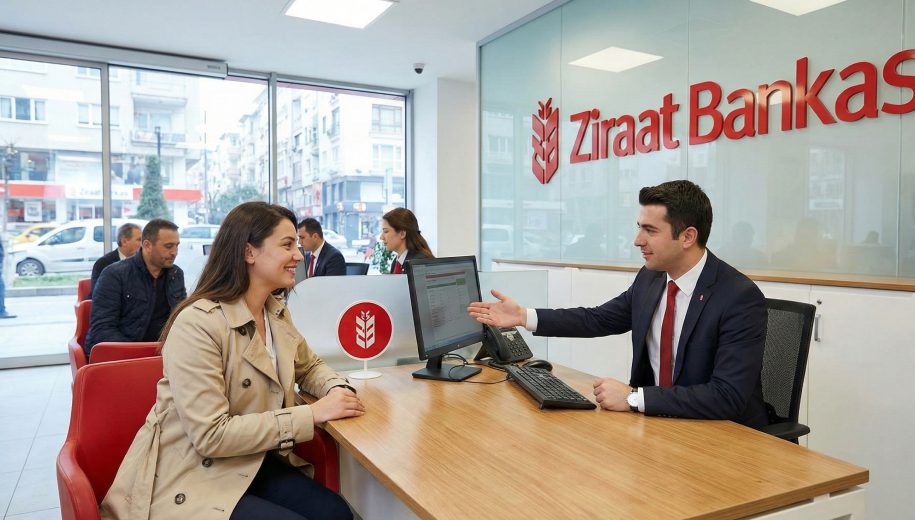
Turkey's banking system has a modern structure, but for an international investor, understanding the difference between state and private banks is vital. In the state banks group (Kamu Bankaları), "Ziraat Bank" (Ziraat Bankası), as Turkey's largest bank, holds the largest share in providing services to foreigners and follows facilitative policies. Following that, "VakıfBank" is a favorable option for large currency investments. In contrast, private banks like "İş Bank," "Garanti," and "Akbank," due to Western partners and strict compliance rules, often present serious challenges for opening accounts for foreigners without permanent residence.
Obtaining a Tax ID (Vergi Numarası); The First Step to Investment
In the Turkish financial ecosystem, no official activity is possible without a "Tax ID Number." It should be noted that obtaining this ten-digit code does not mean becoming a tax liability, but merely a financial identity for registration in systems. Fortunately, in 2026, the process of obtaining this code has been completely digitized. Applicants can receive their tax ID file without needing to visit in person, through the Interactive Tax Office website (ivd.gib.gov.tr) by entering accurate passport information. This document is the first requirement any banker will ask from you to start the account opening process.
Rules for Obtaining Turkish Citizenship with a $500,000 Bank Deposit

According to Article 12 of the Turkish Citizenship Law, any foreign national who deposits the equivalent of $500,000 USD in Turkish banks is eligible for citizenship. However, in 2026, the executive details of this law have seen significant changes, and lack of awareness can disrupt the process. This method is a popular option for business people and investors due to the high processing speed and complete transparency of the money trail.
3-Year Blockage and Mandatory Currency Conversion
The first condition in this process is the mandatory 3-year holding period. The investor must commit not to withdraw the principal amount of $500,000 from the bank for 3 years, and this commitment is recorded as a "Blockage" (Bloke) on the account. The second and most important change in recent regulations is the mandatory Currency Conversion. Based on Central Bank circulars to support the Lira, the investor can no longer hold the amount in USD cash banknotes but is obliged to convert their foreign currency into Turkish Lira. Although this condition might seem worrying at first glance given Turkey's inflation, the government has completely covered this risk by introducing "YUVAM" accounts. The positive point is that the blockage only applies to the principal capital, and the accrued interest is withdrawable.
What is a YUVAM Account? Guaranteeing Principal Against Lira Fluctuation

The "YUVAM" account (Deposit Account for Non-Resident Citizens) is now available to all foreign nationals and is considered the primary tool for safe investment in Turkey. This account is the Turkish government's smart response to investors' main concern, "Lira depreciation," effectively reducing currency risk to zero.
How are Currency and Lira Profits Calculated in Protected Accounts?
The YUVAM account is a hybrid financial instrument merging bank deposit features with exchange rate insurance. The process works as follows: You hand over your foreign currency to the bank, and the Central Bank converts it to Lira at the daily rate and deposits it. at the end of the maturity period, the bank compares two values: First, the principal in Lira plus high bank interest (e.g., 40%); and Second, the principal in foreign currency (equivalent to the initial $500k) multiplied by the current exchange rate plus a currency incentive interest (3% to 4%). The bank commits to paying whichever amount is "higher." This means if the Lira crashes, the Central Bank pays the difference to preserve your dollar principal, and if the Lira remains stable, you receive the high bank interest. This mechanism is a win-win strategy for the investor.
Comparing Investment in Turkey: Bank Deposit vs. Real Estate; Which is More Profitable?

International investors are often hesitant between buying property and bank deposits. Although buying real estate is a traditional method, in 2026, bank deposits have significant competitive advantages. In terms of "Liquidity," bank deposits have absolute superiority; your money is liquid in the bank and immediately withdrawable after 3 years, whereas selling a property may take months. From the "Side Costs" perspective, bank deposits have almost no cost, but buying property involves 4% title deed tax, real estate commissions, and maintenance costs.
Also, regarding "Risk," the most significant challenge of bank deposits is currency fluctuation, which is covered by the YUVAM account. However, in the real estate market, risks such as a housing price bubble in dollar terms, lack of habitation certificates, and title deed fraud exist. Therefore, bank deposits are suitable for those whose priority is quick access to money after 3 years, avoiding tenant hassles, and having a transparent passive income.
Opening a Bank Account in Turkey for Foreigners; Allowed Banks and Compliance
One of the biggest challenges for foreign nationals is the issue of opening an account due to international banking regulations. However, this path is not closed. Based on field experiences, "Ziraat Bank" (Ziraat Bankası) remains the best option due to its wide network and familiarity with the conditions of foreign customers. "VakıfBank" also shows good cooperation for large amounts. Additionally, Participation Banks (Katılım Bankaları) operating based on Islamic banking principles are suitable alternatives.
Solving the Address Proof Challenge and Opening an Account at Ziraat Bank
Banks are legally obliged to verify the customer's residential address. For foreigners who do not yet have Turkish residence (Kimlik), a practical solution accepted by most Ziraat Bank branches is providing a water, electricity, or gas bill from their home country registered in their own name. This bill must be officially translated into Turkish and notarized or stamped by the consulate. Precision in matching the address on the bill with the bank forms is vital.
Legal Money Transfer Methods to Turkey for Investment (Cash Declaration)
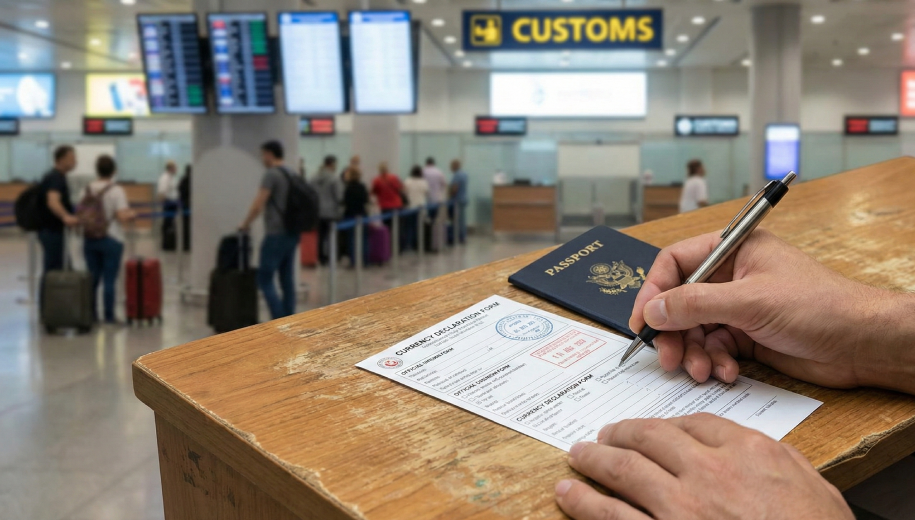
A $500,000 investment requires the safe and legal transfer of capital, and the "Source of Funds" must be transparent to the Turkish government. The golden rule and the most legal route is the physical transfer of currency and filling out the "Cash Declaration Form" (Nakit Beyan Formu) at the Turkish airport. The passenger must declare the cash entry before passing through customs; this paper is the proof of your money's legality, and banks need it to deposit large amounts.
The Importance of the Receipt (Dekont) in the Citizenship Process
If you use exchange offices or remittance systems, the deposit receipt or "Dekont" plays a vital role. In the description section of the bank receipt, it must be stated that this money is for "Citizenship Investment" (Vatandaşlık Yatırımı İçin). Small, fragmented transfers without specific descriptions can cause problems during the review by the Banking Regulation and Supervision Agency (BDDK) and may lead to the rejection of the citizenship file.
Tax Rules on Bank Deposit Interest in Turkey for Foreigners
In Turkey, tax transparency is a principle, and interest income from bank deposits is subject to "Withholding Tax" (Stopaj), which the bank deducts automatically. Tax rates for long-term Lira deposits have been reduced to increase investment attractiveness. A very important point for international investors is the existence of "Double Taxation Avoidance Treaties" between Turkey and many countries. This agreement means that if you have paid tax on your bank interest in Turkey, legally, you should not pay tax again in your home country for the same income, which is a significant legal advantage.
Step-by-Step Guide to Investing in Turkish Banks for Citizenship
To transform from an interested party into a successful investor, you must follow a precise roadmap. First, get your ID documents and utility bill officially translated in your home country. Upon traveling to Turkey, make sure to fill out the Cash Declaration Form at the airport upon arrival. Then, obtain your Tax ID online and get a SIM card. In the next step, visit one of the central branches of Ziraat or Vakıf banks and open a bank account. After depositing the $500,000, submit your written request for currency conversion and opening a 3-year YUVAM account with the condition of "Blockage for Citizenship." Finally, the bank receives the Certificate of Conformity from the BDDK, and you can apply for citizenship with the help of a lawyer.
The Future of Investment in Turkish Banks; Opportunities and Risks
Investing in Turkey via bank deposits in 2026 is a smart, transparent, and low-risk path for international investors. The combination of high bank interest rates with the currency protection of YUVAM accounts effectively eliminates the concern of Lira depreciation and guarantees a secure return. Compared to the real estate market grappling with stagnation and legal complexities, the banking system is an option offering high liquidity and easy management. By strictly adhering to executive details and proper documentation, you can not only preserve your capital in a safe haven but also obtain citizenship of a country that is a solid bridge to global markets.